What's included in the rental
A construction fence rental from us is a full-service line, not a pile of panels dropped at the curb. One price covers:
- The fence itself — chain-link panels, weighted feet or driven posts, and the couplers that lock panel to panel
- Delivery to the site and staging of the material where the run is going
- Installation — we stand and brace the line to the perimeter you've marked out
- The rental period itself, billed daily, weekly or monthly depending on how long you need it
- Teardown and pickup at the end, including hauling everything off your site
Gates, privacy or wind screen, anti-climb configurations and mid-job moves are quoted on top of the base line, because not every site needs them. If you want the full numbers, our Hamilton fence rental pricing guide lays out the per-foot rates and trip charges.
Panel specs and typical run sizes
Our standard temporary panels are roughly 6 feet tall and 10 to 12 feet wide. That is the height most job-site safety requirements and most insurers expect around an open excavation or an active build. Panels sit in weighted feet on hard surfaces, or on driven posts where the ground allows and the wind exposure demands it, and every joint is clamped with a coupler so the run behaves like one continuous fence instead of a row of loose panels.
To size a job, walk the perimeter you want closed off and give us the rough linear footage — or just give us the lot dimensions and we'll work it out. As a rough feel: a typical single residential lot in Hamilton usually lands somewhere in the 150 to 300 linear foot range once you fence the frontage and the sides, a commercial pad or a plaza renovation is normally several hundred feet, and a full development block runs into the thousands. The per-foot rate comes down as the run gets longer.
Delivery, installation and pickup
Booking to fence-on-the-ground is usually a day or two for a standard Hamilton site, faster when we have stock ready and it's an urgent hazard. On the day, our truck arrives, we walk the line with you or your site super, and we set panels along the perimeter you've marked. A typical residential lot goes up in a couple of hours; large runs and hoarding lines take longer and may need more than one trip.
When the job wraps, you call us and we come back, break the line down and haul the panels away. You never load a panel, move a concrete block or rent a truck — that's the difference between renting a temporary fence and buying one.
Rental terms and typical minimum periods
We rent daily, weekly and monthly. Most construction sites run on a monthly cycle because that's how long the work takes — the fence goes up at mobilization and comes down at substantial completion, and you're billed month to month in between. Short-term jobs (a two-day demo, a burst watermain, a quick site securing) are quoted on a daily or weekly basis, and very short rentals normally carry a minimum charge because the delivery and pickup trips cost the same whether the fence stands for two days or two months. We tell you exactly what that minimum is inside the quote, before anything leaves the yard.
If the site changes — you need to open a section for a crane pick, shrink the footprint after backfill, or extend another six weeks — call us. Adds, pulls and moves get priced when they happen and nothing gets added to your invoice you didn't agree to first.
What your site needs ready before we deliver
Delivery days go sideways for the same handful of reasons every time. Have these sorted before we roll and the install takes half as long:
- A marked perimeter — stakes, paint or even a walk-through with the site super, so we know exactly where the line goes
- Truck access to the site and enough room to unload panels near the run, not two lots away
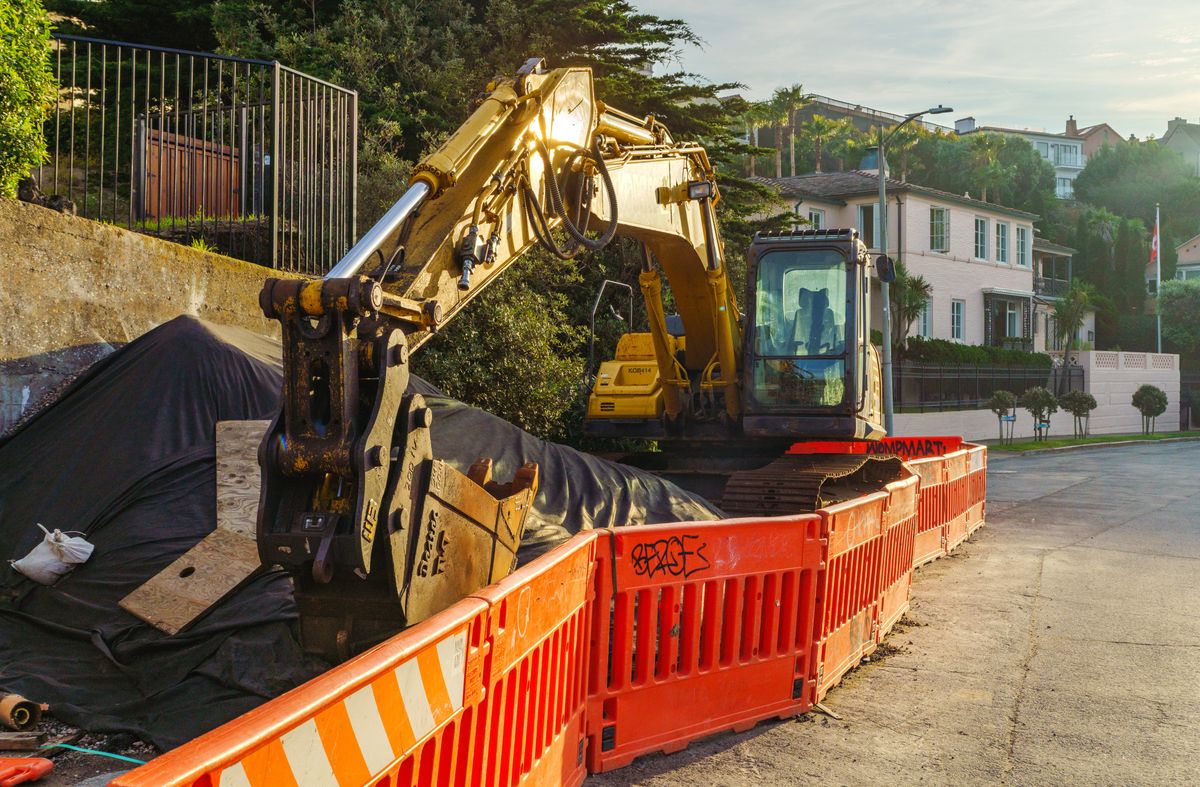
- A cleared fence line — panels can't be set through a spoil pile, a stack of forms or a parked excavator
- Locates done if anything is being driven into the ground rather than sitting in blocks
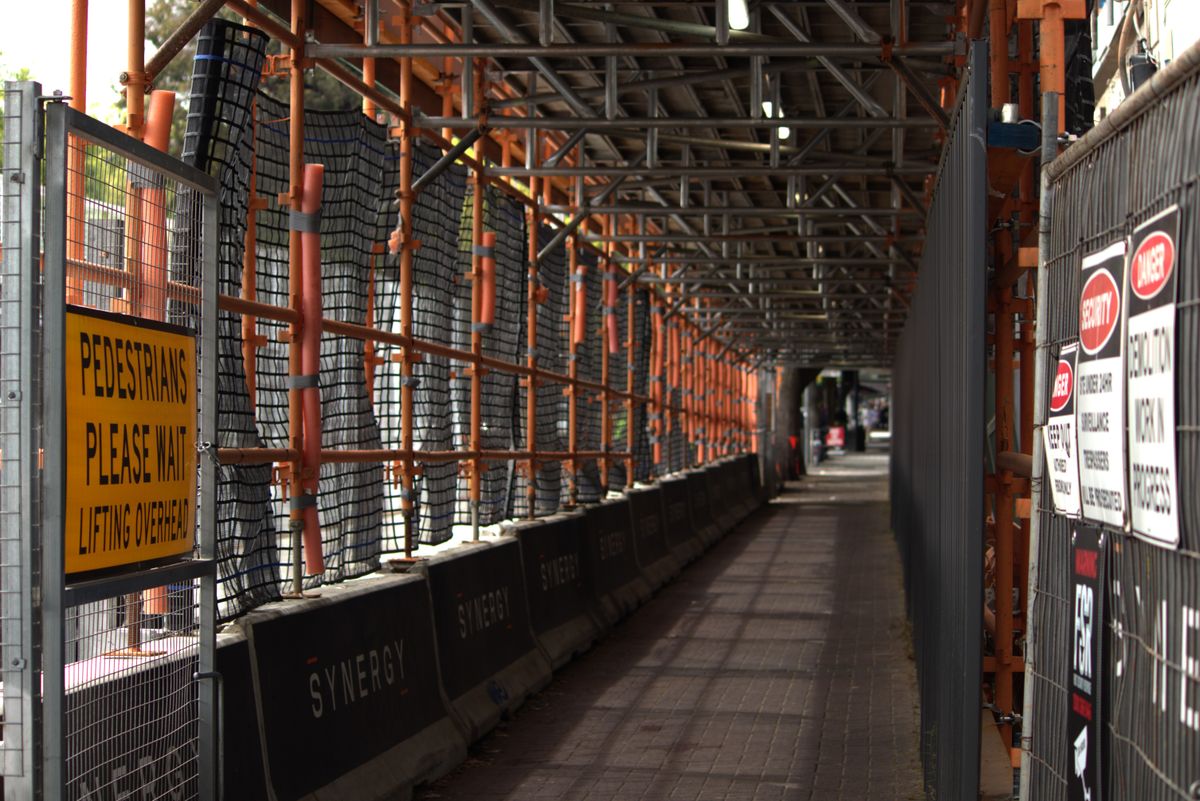
- Permits in hand if any part of the run occupies City sidewalk, boulevard or roadway — see our Hamilton hoarding permit guide
- Gate locations decided — where trucks come in, where crews walk in, and roughly how wide those openings need to be
Not sure on any of it? That's a phone call, not a problem. Tell us the address and what you're building and we'll tell you what the fence line should look like.